
.
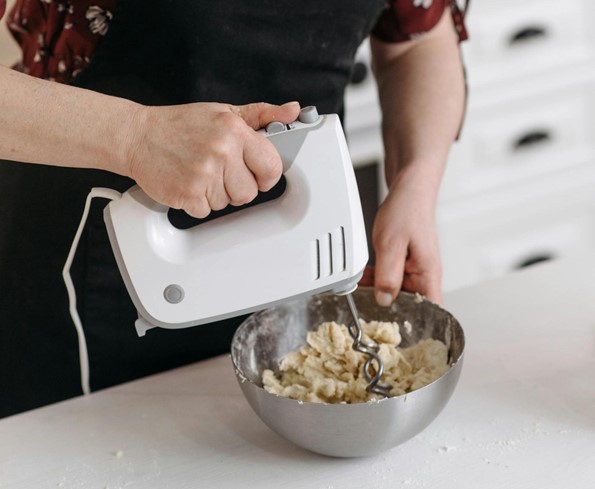
In bread making, mixing is a crucial stage that determines the quality of the bread we produce. Unfortunately, many people may overlook this stage, seeing it merely as a process of combining ingredients. In reality, mixing is a multi-step process that involves measuring ingredients, mixing, and kneading until the dough achieves the ideal texture.
The Importance of Measuring Ingredients
Accurately measuring ingredients is essential to ensure that the dough is neither too stiff nor too soft. It’s best to follow a recipe that uses weight measurements rather than spoon measurements to avoid over- or under-measuring ingredients. Pay close attention to the use of eggs and water. If you don’t use eggs, you’ll need to add more water to prevent the dough from becoming too stiff. One egg is generally equivalent to 45-60 grams of water.
Once the ingredients are correctly measured, the next step is mixing. Typically, this is done by first mixing the dry ingredients, then adding the liquid ingredients, and finally the butter or margarine. There are several mixing methods you can choose from (which we will discuss in the following points).
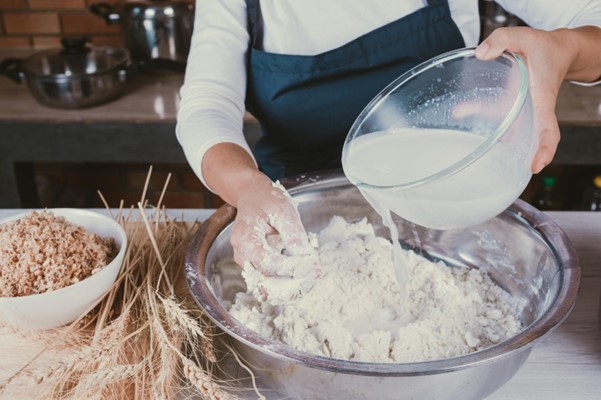
Foto : Freepik
The Purpose of Mixing in Baking
The primary purpose of mixing is to evenly distribute yeast cells throughout the dough and activate them. Active yeast produces gas during proofing, or the fermentation process.
Mixing also hydrates the flour and other dry ingredients to form gluten. Well-developed gluten gives the dough elasticity, allowing it to trap the gas produced by the yeast and enabling the dough to rise.
Moreover, the final texture of the bread is greatly influenced by the mixing stage. Properly mixed dough will result in bread with uniform pores and a smooth texture. On the other hand, improper mixing can lead to bread with a coarse texture and a lack of softness.
Foto : Unsplash
Proper Mixing Methods
There are three common methods used in dough mixing: the Straight Dough method, Modified Mixing, and the Sponge Method. Straight Dough is the simplest mixing method. It consists of just one step: combine all the ingredients in a bowl and mix. However, this method can sometimes result in uneven distribution of the yeast throughout the dough. Modified Mixing is essentially a variation of the straight dough method, designed to ensure the sugar is evenly distributed in the dough. In this method, yeast is dissolved in the liquid ingredients first, then mixed with the dry ingredients and kneaded until the dough is smooth and elastic. Sponge Method is considered a highly effective mixing method for achieving better texture, rise, and even enhanced flavor. This method involves mixing part of the liquid ingredients, yeast, and flour (and sometimes part of the sugar). Allow this mixture to ferment until it doubles in size. Afterward, deflate the dough, add the remaining flour and other ingredients, and mix until the dough becomes elastic. By understanding the importance of the mixing stage and applying the appropriate method, you can produce soft and delicious bread. It’s also crucial to pay attention to the ingredients you use. Make sure the yeast is still active, and choose high-quality, high-protein wheat flour.
If you’re looking for a recommendation for high-quality wheat flour, PT Manunggal Perkasa products are an excellent choice. For bread making, opt for the Kantil or Aster brands, which have a protein content of up to 12%-13%. (pj/mkt)
Referensi :
https://swissbake.ch/blog-detail/importance-of-dough-mixing-and-fermentation#:~:text=Purpo ses%20Of%20Mixing%20Dough%20Are,flour%20and%20other%20dry%20ingredients
https://bakerpedia.com/processes/dough-mixing/#:~:text=Dough%20mixing%20is%20a%20 process,and%20hydrated%20gluten%2Dforming%20proteins.