
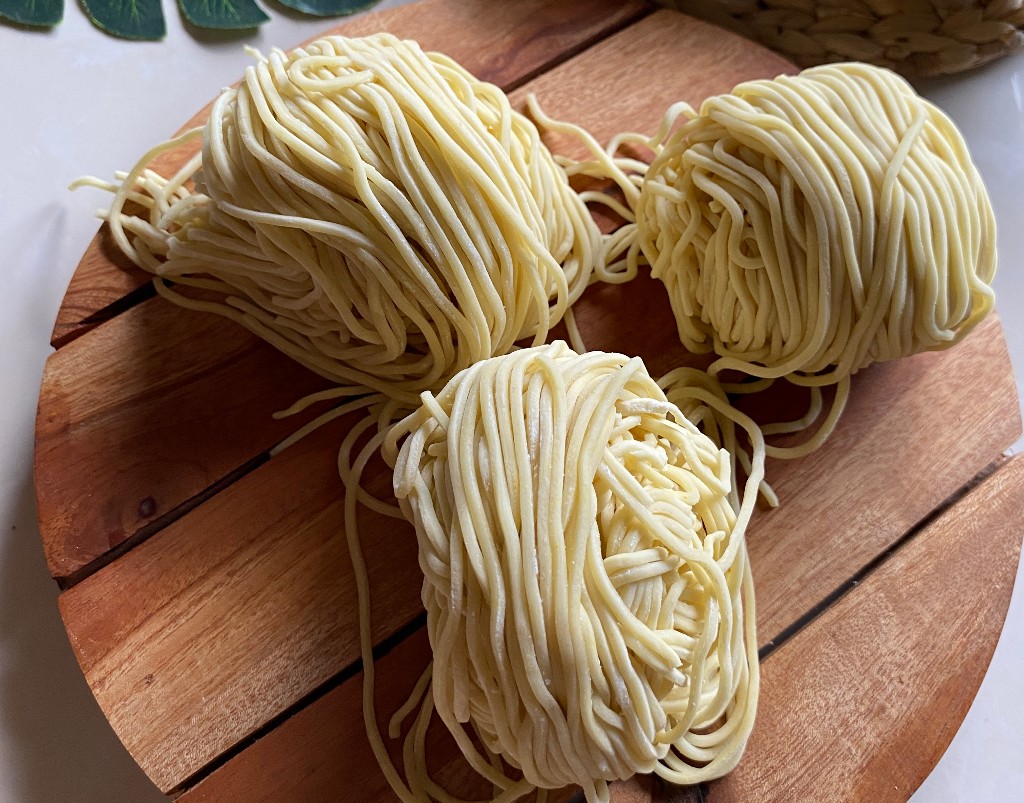
Noodles are a favorite food for many people. Their chewy texture, savory flavor, and versatile presentation make them perfect to enjoy anytime. If you’re a noodle lover and want to make your own at home, go for it! Besides being great for personal consumption, homemade noodles can also be a promising home business idea. To get the best results, follow these tips for making chewy noodles!
1. Use High-Protein Wheat Flour
The key to making chewy noodles lies in the type of flour you use. Always choose high-protein wheat flour, as it contains a high amount of gluten. Gluten gives the dough its elasticity, resulting in chewy noodles.
One of the best recommendations is Kantil or Aster flour from PT Manunggal Perkasa. These flours have a high gluten content (around 33–37%), making them ideal for producing high-quality noodles.

Foto : One of the chicken noodle production sites
2. Add Tapioca or Sago Flour
To make your noodles even chewier and smoother, mix a small amount of tapioca or sago flour into the wheat flour dough. The ratio can be about 10–20% of the total wheat flour. For example, for 500 grams of wheat flour, add 50–100 grams of tapioca or sago flour. This acts as a natural alternative to synthetic firming agents like alkaline salt, soda Q, or phosmix. It also helps reduce the floury smell in noodles.
3. Watch the Water and Egg Measurements
Eggs add strength and chewiness to noodles—but remember, eggs count as a liquid. If you’re using eggs, reduce the amount of added water. Some recipes don’t require any water if enough egg is used. If you do use water, add it gradually to prevent the dough from becoming too soft. Good noodle dough should be slightly firm and stiff.
4. Add Salt and Oil
Another tip for chewy noodles is adding a pinch of salt and a bit of oil. Salt not only enhances flavor but also helps with gluten development. Meanwhile, oil makes the dough easier to knead and less sticky. This step is optional, but it can be especially helpful during the rolling process later.
5. Don’t Over-Knead the Dough
Knead the dough just enough so that all the ingredients are well mixed and no longer stick to your hands. It doesn’t need to be smooth and elastic like bread or donut dough. Then, let the dough rest for at least 30 minutes in a covered container or wrapped in plastic wrap. This allows the gluten to relax, making the dough more pliable when rolled out.
6. Roll Out the Dough Properly
Use a noodle roller or rolling pin to gradually flatten the dough. Start with the thickest setting and move to thinner ones. In the early stages, fold and roll the dough several times. This helps build strong gluten structure, making the noodles flexible and less likely to break. Before cutting, dust the dough with tapioca flour to prevent sticking.
7. Pay Attention to the Boiling Process
Boil noodles in plenty of fully boiling water. Add a bit of oil to keep them from sticking together. Once the noodles float and appear cooked, immediately remove and drain them. Avoid overcooking, as it can make noodles too soft and prone to breaking. To enhance chewiness, rinse with cold or ice water—this stops the cooking process and keeps the texture chewy.
By following these tips, you can make chewy, durable, and delicious noodles at home. Good luck with your homemade noodle-making adventure. (pj/mkt)