
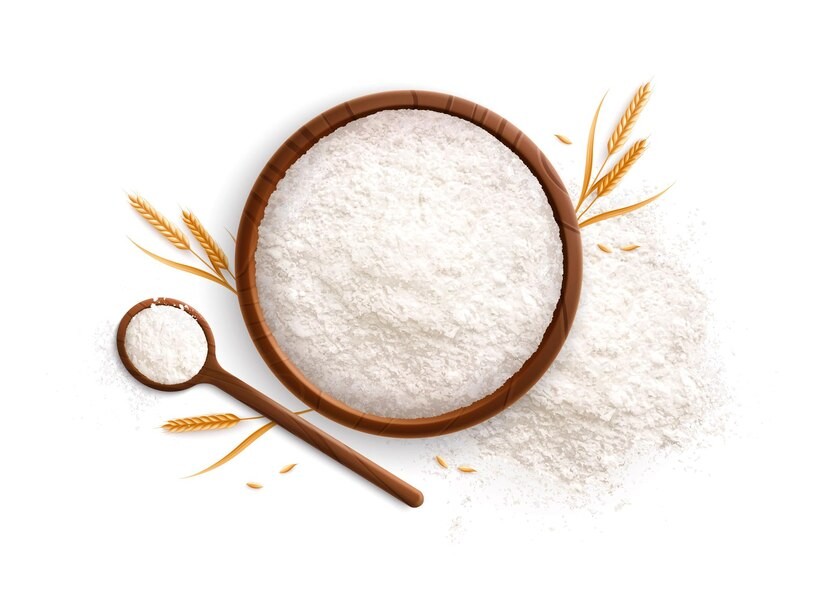
Wheat flour and tapioca flour are two ingredients commonly used in a variety of dishes, especially in baking cakes, bread, and other foods. Although both are often used in the culinary world, they have very different characteristics and uses. To help you better understand the differences between these two types of flour, here is an explanation.
Wheat flour and tapioca flour have quite significant differences, in terms of their basic ingredients, nutritional content, and culinary applications. Wheat flour is more suitable for making dough that requires rising, such as bread and cakes, due to its gluten content which provides a chewy and elastic texture.
Tapioca flour, on the other hand, is ideal for thickening soups, sauces, or making foods that require a soft and chewy texture, as it is gluten-free.

Source: Freepik
1. Basic Ingredients
Wheat Flour: Made from finely ground wheat grains. This flour contains gluten, a protein that gives elasticity to dough. Because of its gluten content, wheat flour is suitable for making dough that needs to be firm and chewy, such as bread, cakes, and pasta.
Tapioca Flour: Unlike wheat flour, tapioca flour comes from starch extracted from cassava roots. It does not contain gluten and is often used to give softness and chewiness to various foods.
2. Gluten Content
Wheat Flour: Contains gluten, a protein that provides a chewy and elastic texture in dough. Gluten helps dough rise, as seen in bread or cakes made from wheat flour.
Tapioca Flour: Gluten-free. Therefore, it’s often used by people on a gluten-free diet. Tapioca flour is more commonly used as a thickening agent or to give a chewy texture, rather than for rising.
3. Texture and Consistency
Wheat Flour: Has a coarser and denser texture. It gives dough a heavier and chewier consistency. When used in baking, it produces a denser and more elastic texture.
Tapioca Flour: Has a very fine and soft texture. It adds softness and chewiness, and can absorb liquids well. When used, it results in a lighter and more elastic texture in food.
4. Culinary Uses
Wheat Flour: Frequently used in making bread, cakes, pasta, and other doughs that require elasticity and rising. It can also be used to thicken soups or sauces, although cornstarch is more commonly chosen for that purpose.
Tapioca Flour: Widely used as a thickener in soups, sauces, or puddings. It is also popular for making various types of snacks or cakes such as pempek, crackers, and other tapioca-based treats. Its distinctive softness also makes it ideal for products that require a chewy texture.
5. Nutritional Content
Wheat Flour: Contains carbohydrates and proteins, along with small amounts of B vitamins and minerals such as iron and magnesium. It also has higher glucose and fiber content compared to tapioca flour.
Tapioca Flour: Contains more carbohydrates but very little protein, fat, or fiber. It contains almost no vitamins or minerals, making it lower in nutritional value compared to wheat flour.
6. Color
Wheat Flour: Typically off-white to light yellowish in color, depending on the type of wheat and the milling process.
Tapioca Flour: Bright white in color and appears finer than wheat flour.
7. Rising Ability
Wheat Flour: Due to its gluten content, wheat flour can rise well, making it ideal for doughs that need to rise during baking, such as bread and cakes.
Tapioca Flour: Does not have the ability to rise like wheat flour. Therefore, it is more often used to provide softness, chewiness, or as a thickening agent in dishes.(pj/mkt)