
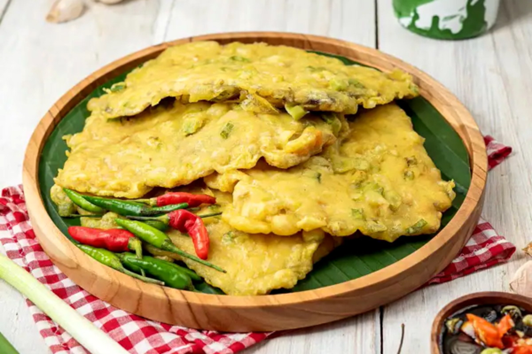
Mendoan is a traditional dish originating from Banyumas Regency, Central Java Province. This delicacy is known for its unique flavor, featuring a soft texture inside and a slightly crispy outer layer. However, more than just a snack, mendoan carries a long history closely tied to the culture of the Banyumas community. The word “mendoan” comes from the Banyumasan dialect, derived from the word mendo, which means soft or half-cooked. This refers to the cooking method, where the tempeh is only briefly fried in hot oil, leaving the inside tender. This frying technique differs from typical fritters, which are usually fried until completely dry and crispy.

Photo: Tempe mendoan before being cooked (source: Tokopedia)
The History of Mendoan’s Development
Mendoan has been part of Banyumas’ culinary tradition for generations. Some sources state that mendoan has existed since the Dutch colonial era. However, there are no definitive records of who first created the dish. The people of Banyumas have long considered tempeh a staple food, as the region has an abundant soybean supply. In the past, traders and local residents began preparing tempeh differently from most other areas in Java, by making thin slices of tempeh, coating them in seasoned flour batter, and frying them lightly. Over time, mendoan gained popularity and became a favorite snack among the Banyumas community, eventually spreading to other regions across Indonesia.

Photo: The mendoan frying process (source: Radar Banyumas)
Recognition as an Intangible Cultural Heritage
In 2021, Indonesia’s Ministry of Education, Culture, Research, and Technology officially designated mendoan as an Intangible Cultural Heritage (WBTb) from Banyumas. This recognition affirms that mendoan is not merely a food item but also a vital part of the cultural identity of the Banyumas people that must be preserved.
Mendoan is not just a light snack; it holds deep cultural significance. It is often served at family gatherings, traditional ceremonies, and community events as a symbol of togetherness. In traditional Banyumas eateries, mendoan is commonly enjoyed with hot tea or coffee, creating a distinct and relaxed local atmosphere.
Moreover, mendoan has become a culinary tourism attraction. Many visitors travel to Banyumas to taste authentic mendoan, freshly served with sweet soy sauce and chili or green bird’s eye chili. With its long-standing history deeply rooted in the daily lives of local people, mendoan has grown into one of Indonesia’s nationally recognized culinary icons.
If you ever visit Banyumas, tasting mendoan straight from its place of origin is an experience not to be missed. Have you ever tried the delicious taste of mendoan? If not, then it’s time to plan a visit to Banyumas Regency. PT Manunggal Perkasa, a manufacturer of high-quality wheat flour, offers flour variants that are perfect for making mendoan, such as the Dahlia and Bakung brands.(pj/mkt)