

An oven is a kitchen appliance used for heating or baking food such as bread, pizza, cakes, meat, or other dishes. Nowadays, there are many types of ovens available in the market, such as tangkring ovens, electric ovens, gas ovens, and convection ovens, making it challenging to choose the one that best fits your needs.
In this article, we will discuss tips for buying an oven based on various needs, from personal use, home-based baking businesses, to large-scale bakery operations.
Tips for Buying an Oven for Personal Use
For personal use at home, especially if you bake or cook only occasionally, you don’t need a large oven with complex features. It’s better to choose an oven with a temperature controller so you can adjust the temperature according to recipes. Consider tangkring ovens or electric ovens with a capacity of 15-30 liters.
Tangkring Oven : This is suitable for simple baking needs, such as making cookies, bread, or homemade pizza. This oven is easy to use as it only requires placing it on a stove and lighting the fire, making it functional even during a power outage. Additionally, it is more affordable.
However, tangkring ovens sometimes produce uneven heat, and it can be difficult to control the temperature accurately. You also need to monitor the baking process closely to prevent burning.
Electric Oven : Electric ovens offer ease of use, equipped with accurate temperature settings and a timer, allowing you to set the temperature and baking duration according to the recipe. This type of oven produces more even heat, ensuring perfect cooking results.
On the downside, electric ovens consume significant electricity, especially when used for extended periods or at high temperatures, which can lead to higher electricity bills. Additionally, since they rely on electricity, these ovens can suddenly stop functioning during power outages.
Tips for Buying an Oven for Home-Based Baking Businesses
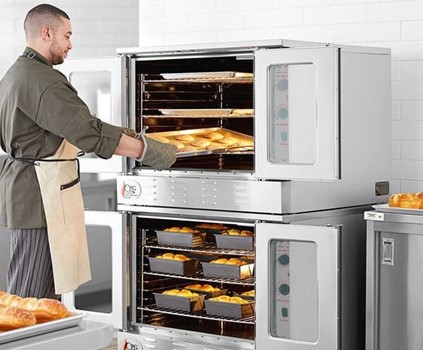
If you frequently bake in larger quantities or run a home-based baking business, you’ll need an oven with a larger capacity (over 30 liters) to meet production demands. Larger ovens allow you to bake more bread at once, reducing baking time.
In addition to capacity, lower production costs are an essential consideration. Choose an oven that is energy-efficient, durable, and requires minimal maintenance.
Ensure the oven has essential features like accurate and stable temperature control and an automatic timer. An oven with precise temperature control will help you produce bread with consistent texture and color. Meanwhile, the automatic timer feature is useful for setting baking times accurately.
For home-based baking businesses, consider a gas oven, which uses LPG as a heat source. Gas ovens reach the desired temperature faster than electric ovens and have more stable temperatures, ensuring evenly cooked food. This type of oven is generally more durable and relatively affordable for small-scale businesses. However, gas ovens carry a higher fire risk compared to electric ovens and require regular maintenance to ensure safety.
Tips for Buying an Oven for Large-Scale Bakeries
Large-scale bakery businesses require ovens with much larger capacities and more advanced features. Large-capacity ovens enable you to bake more products in one batch, reducing the number of baking cycles and increasing production efficiency.
Durability should also be a primary consideration due to the intensive use. Choose ovens made of high-quality materials such as stainless steel, which can withstand heavy workloads and high temperatures.
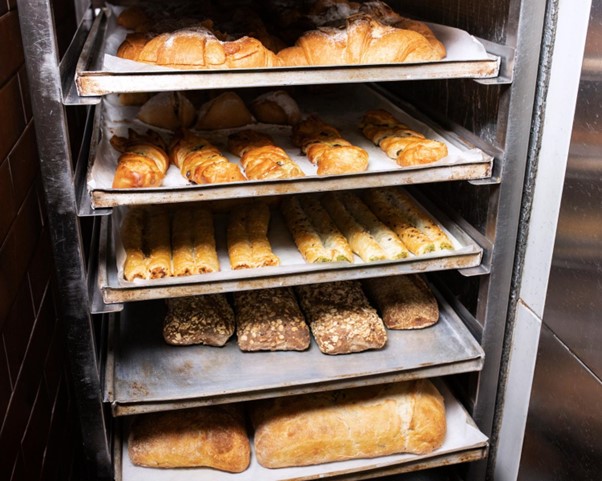
For large-scale bakeries, two types of ovens are commonly chosen :
Convection Oven : This is a standard commercial oven for bakeries. It heats air using a fast-moving fan located in the middle of the oven, ensuring even heat distribution. This prevents cold or hot spots that could lead to uneven baking. Convection ovens are guaranteed to deliver consistent baking results.
Additionally, convection ovens heat bread about 25% to 30% faster than standard ovens, making them ideal for bakeries with high production volumes. The fan’s rapid movement inside the oven also speeds up the browning and crisping process, making this type of oven perfect for both savory and sweet dishes. Besides bread, convection ovens are also suitable for cookies, pies, and brownies.
However, convection ovens are usually more expensive than standard electric or gas ovens. Moreover, improper settings may lead to overheating, affecting baking results.
Deck Oven : Unlike convection ovens, deck ovens use conduction heat to distribute temperature evenly throughout your food via a heated stone or deck. This method transfers heat directly to the baking tray or the product being baked. Deck ovens are most commonly used for baking bread due to their efficient steam circulation technology. More importantly, these ovens are considered more energy-efficient than convection ovens and require less maintenance.
On the downside, deck ovens are typically large and heavy, requiring ample kitchen space. They also require training and baking experience to operate effectively. Routine maintenance is essential to ensure optimal performance.
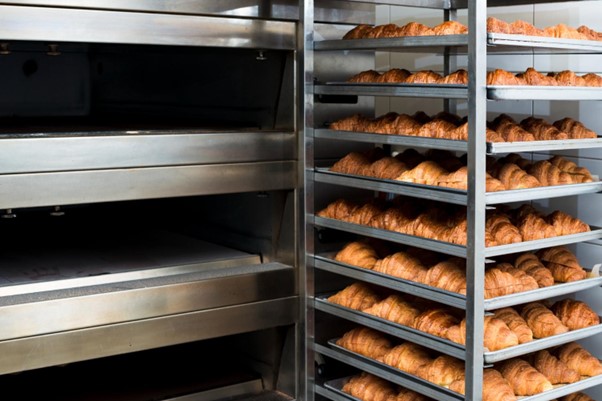
It’s important to remember that a good oven is only one part of success in baking and producing bakery products. The quality of raw materials, particularly flour, plays a vital role in determining the final product.
If you are looking for flour to produce consistent, high-quality bread, Kantil brand flour, produced by PT Manunggal Perkasa, is an excellent choice. We have long been a trusted partner for many bread and bakery entrepreneurs in Indonesia.
Flour from PT Manunggal Perkasa is made from selected ingredients and undergoes milling processes that meet strict quality standards, ensuring its quality is guaranteed. (pj/mkt)
Referensi:
https://momsmoney.kontan.co.id/news/oven-tangkring-vs-oven-listrik-mana-yang-lebih-baik